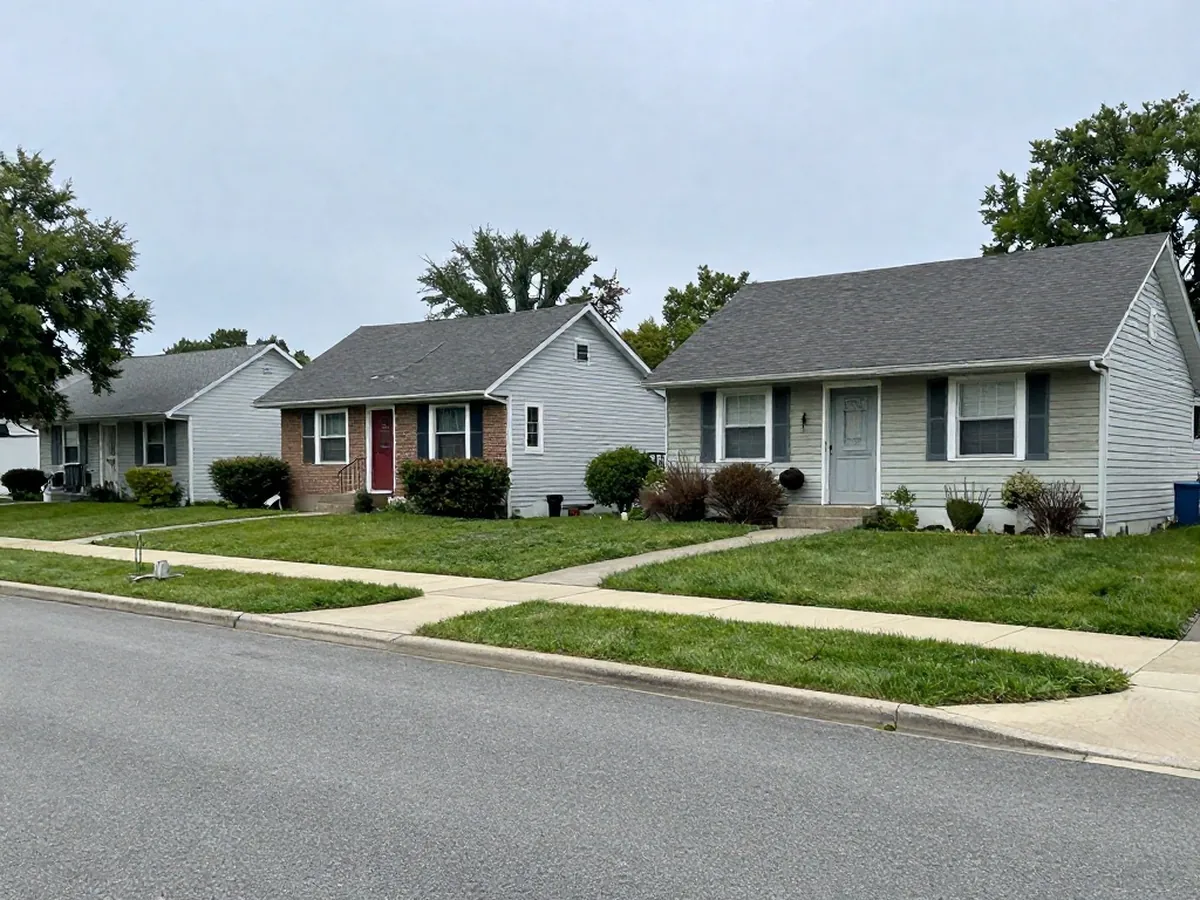
Leaks, curled shingles and wind damage in Clark
Roof Repair in Clark, NJ
Is that brown patch on the ceiling really the roof? Repair work in Clark, NJ usually starts with one sign: a stain, a shingle on the lawn, a pinprick of daylight in the attic.
One step: call (732) 574-5073 with the spot, the roof's age and the date you first noticed it.
Three questions to settle before dialing
Is water reaching a light, an outlet or a bulging ceiling? Leave the room first and read the safety box.
Does the stain grow after rain or sit still? Trace its edge in pencil and date it.
Is it one spot or a whole slope? One spot points to a repair. A slope of curled, gritty shingles points toward the replacement page.
On a visit
Call (732) 574-5073, describe the spot and anything you have tried, and ask what the contractor's schedule looks like for a visit.
The roof surface, scanned for lifted, cracked or missing shingles and for bent or rusted metal.
Dark streaks, damp insulation and daylight, looked for from the attic hatch.
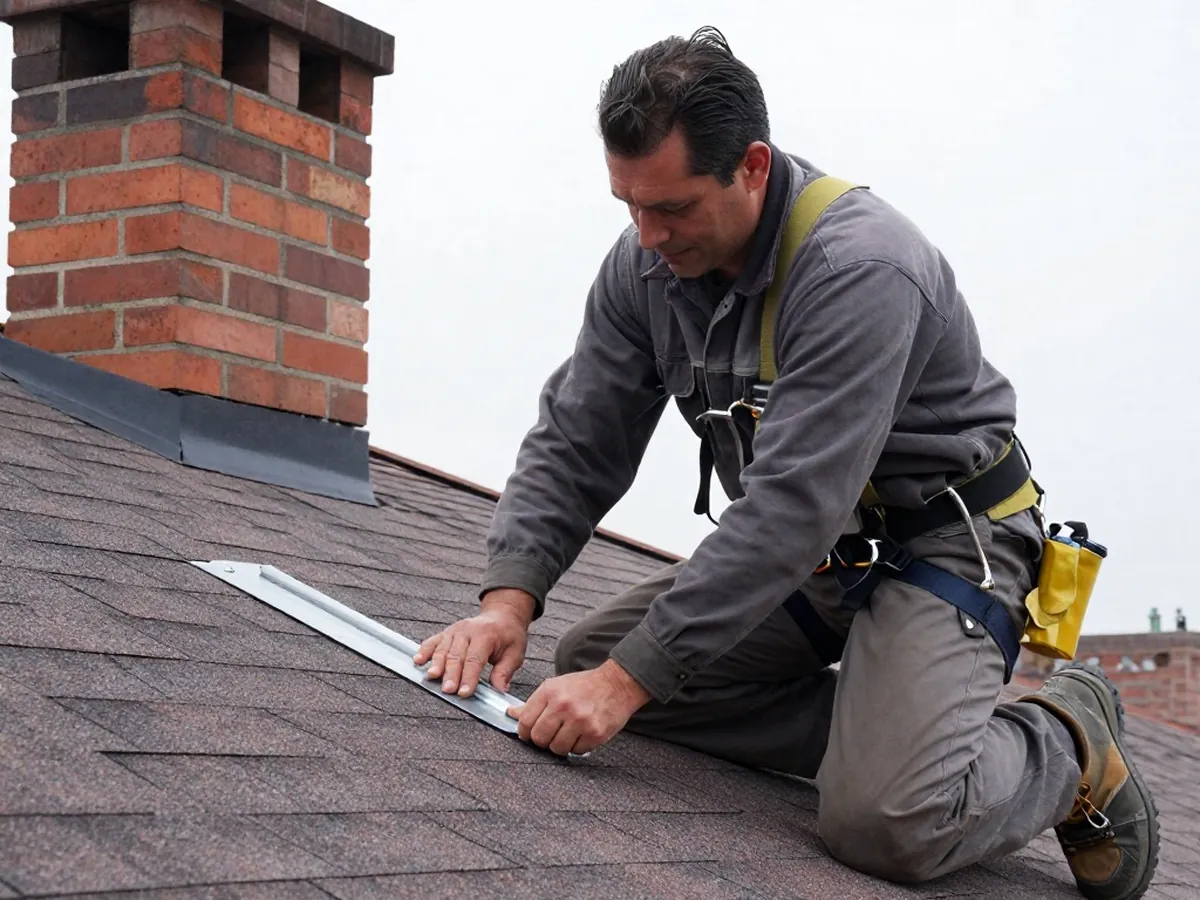
Flashing at chimneys, walls and vent pipes, which the shingle trade group calls the most vulnerable points.
A count of how much of the roof is affected, since one builders' guide leans toward a new roof past 10 percent.
Repair choices in plain words, plus who deals with any town paperwork.
Leave the room first if
- Water at a light, a switch or an outlet means leaving the room. Phone 911 once you are somewhere dry.
- A ceiling is bellying down with water above it: nobody stands beneath it. Dial 911.
- Low-hanging or fallen wire: assume it is live. Thirty feet is the distance to keep, and neighbors stay back too. For help, dial 911 or the utility, PSE&G, whose line is 1-800-436-7734.
- Slick shingles, ice or a steep pitch: leave the climbing to a roofer, and dial 911 if anyone has already fallen.
Short answers
- How loud does a roof leak feel, 1 to 10?
- Loud, 8 to 10: water at a light fixture, a bulging ceiling or a downed wire. Step clear and phone 911 or PSE&G. Middling, 4 to 7: a stain that spreads with each rain. Dial (732) 574-5073 this week. Quiet, 1 to 3: a single cracked shingle, or an old stain that stays dry. Watch it from the ground and call if it comes back.
- Can one damaged shingle be swapped without redoing the roof?
- Often, yes. A Department of Energy brief repeats a builders' guideline: past 10 percent of the roof needing work, plan for a new one. Before that point, a roofer inspects the neighboring shingles to learn whether the damage is a one-off or the first of many.
- What can be checked without a ladder?
- Quite a lot, starting outdoors. The shingle makers' trade group suggests binoculars, first from an upstairs window or the lawn, then a flashlight in the attic aimed at the underside of the roof deck. It singles out flashings as the weakest points, so a stain near metal earns a note.
- Does this cover Cranford and Linden too?
- Yes. The contractor takes calls from Clark and the towns beside it. Cranford roofing notes and Linden roofing notes each have a page. Tenants hand the owner a dated photo first; the roof belongs to the owner.
Neighbors in the job list
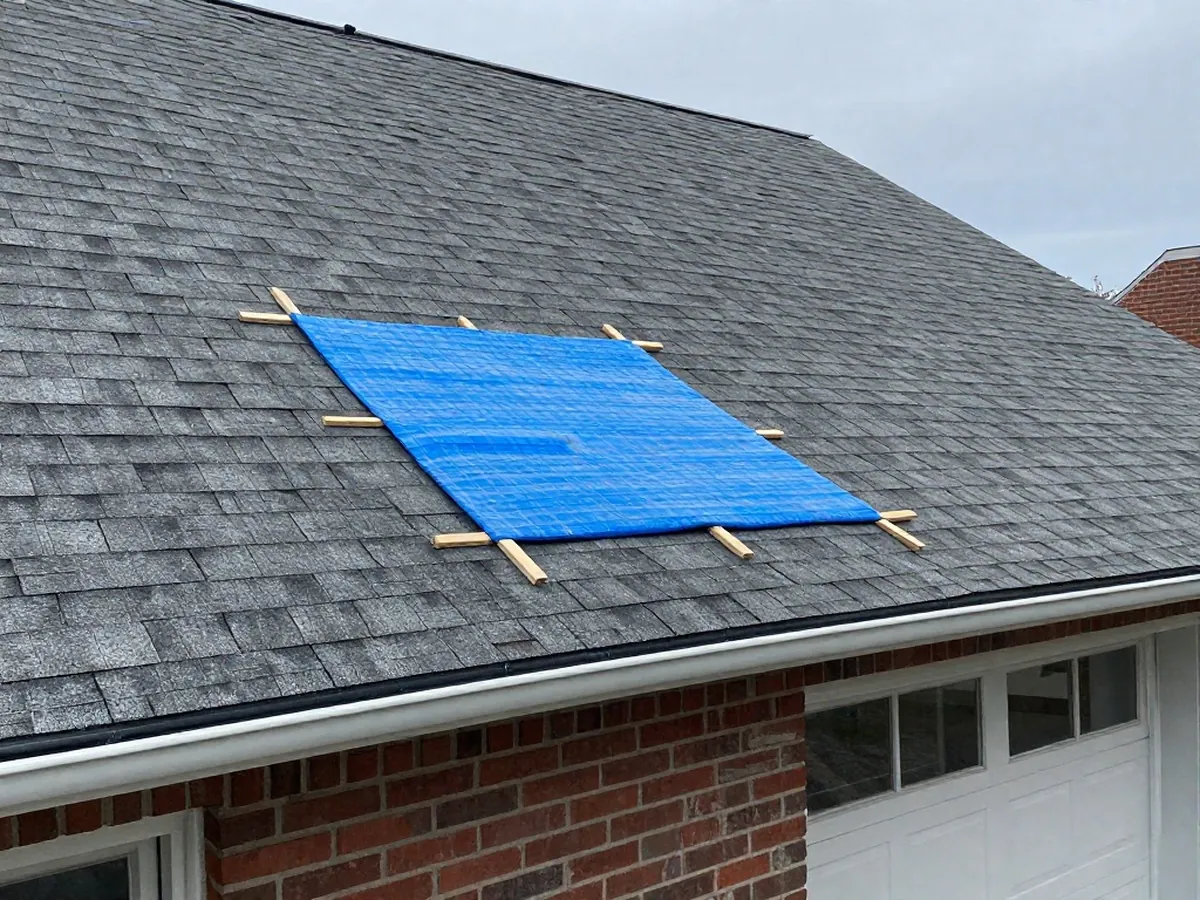
Limbs and gusts lead to storm damage repair. A stain that follows a brick chimney is often a flashing job. Patches that keep appearing in new places make roof replacement the comparison to read.
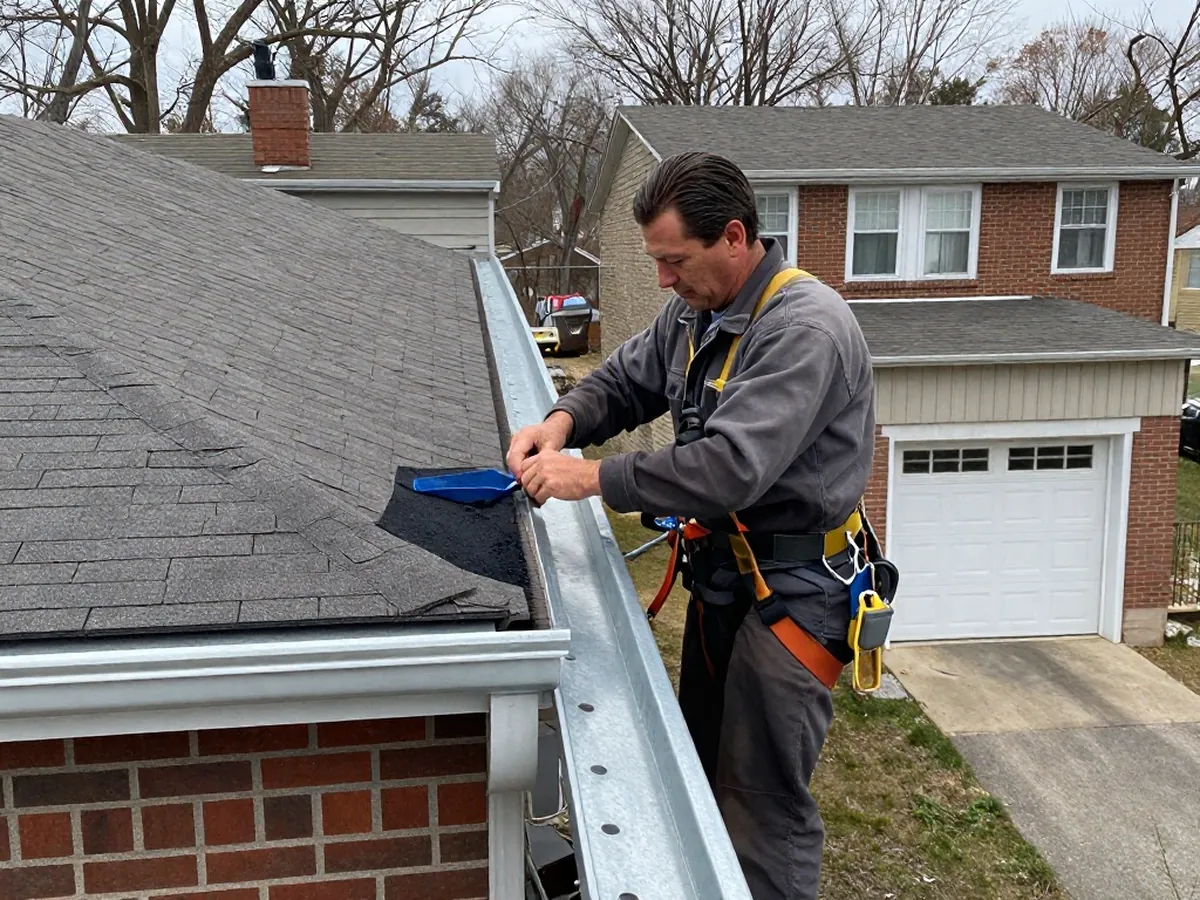
Signs to look for
- A brown or yellow patch on a ceiling that spreads after rain
- Edges curling or cracking, or whole shingles gone missing
- Shingle grit gathering where a downspout ends
- A pinprick of daylight showing through the attic boards
- A musty smell upstairs, or insulation that feels wet
How a repair job tends to run
It starts at the phone. The contractor asks where the stain is, how old the roof is and whether it comes back in the same place.
A visit follows. The roofer looks at the surface, then at the boards from the attic, then at the metal around chimneys and vents.
The work itself is usually modest: a handful of shingles, a section of flashing, a nail that worked loose. Neighbors of the damaged shingles get checked in the same pass.
Last comes the paper trail: a written description of what was done, and photos if you ask for them.
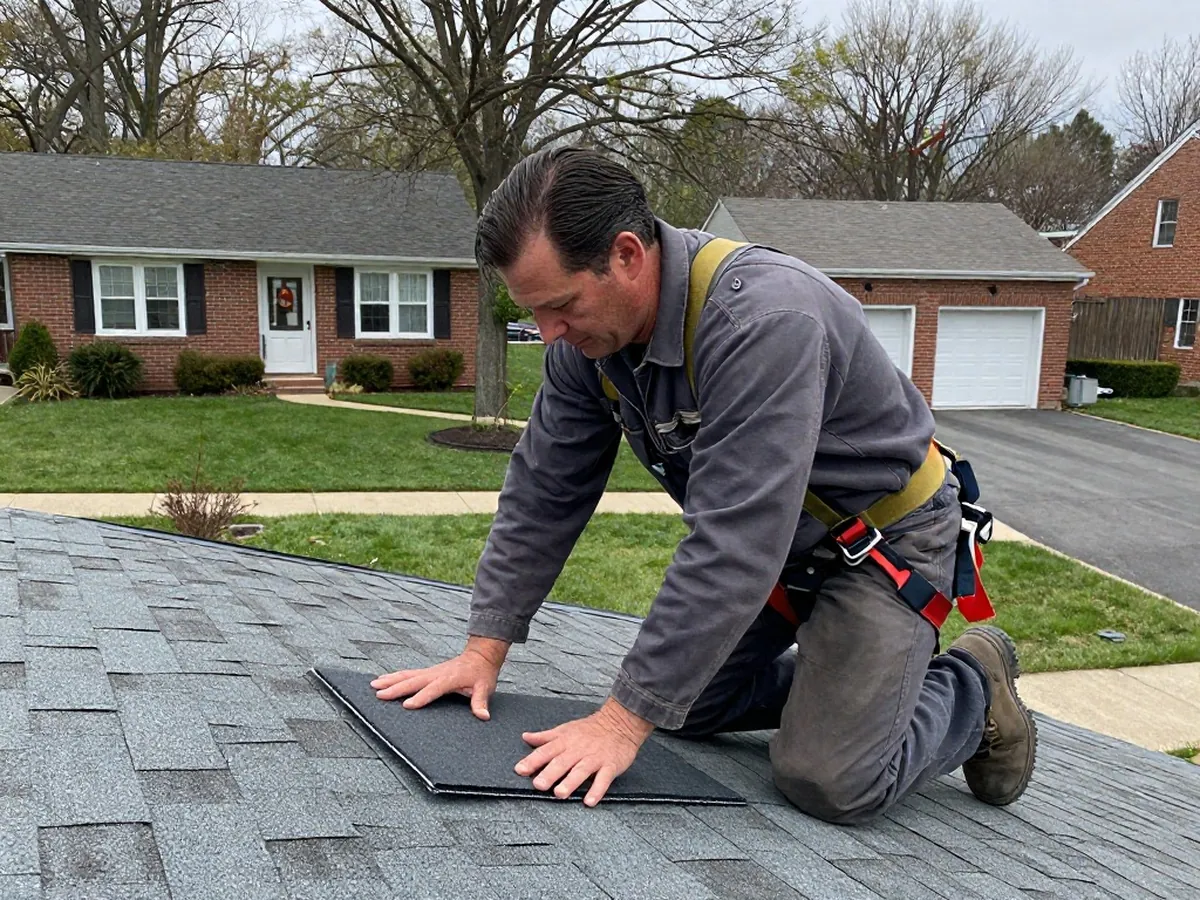
One shingle, taken out and put back
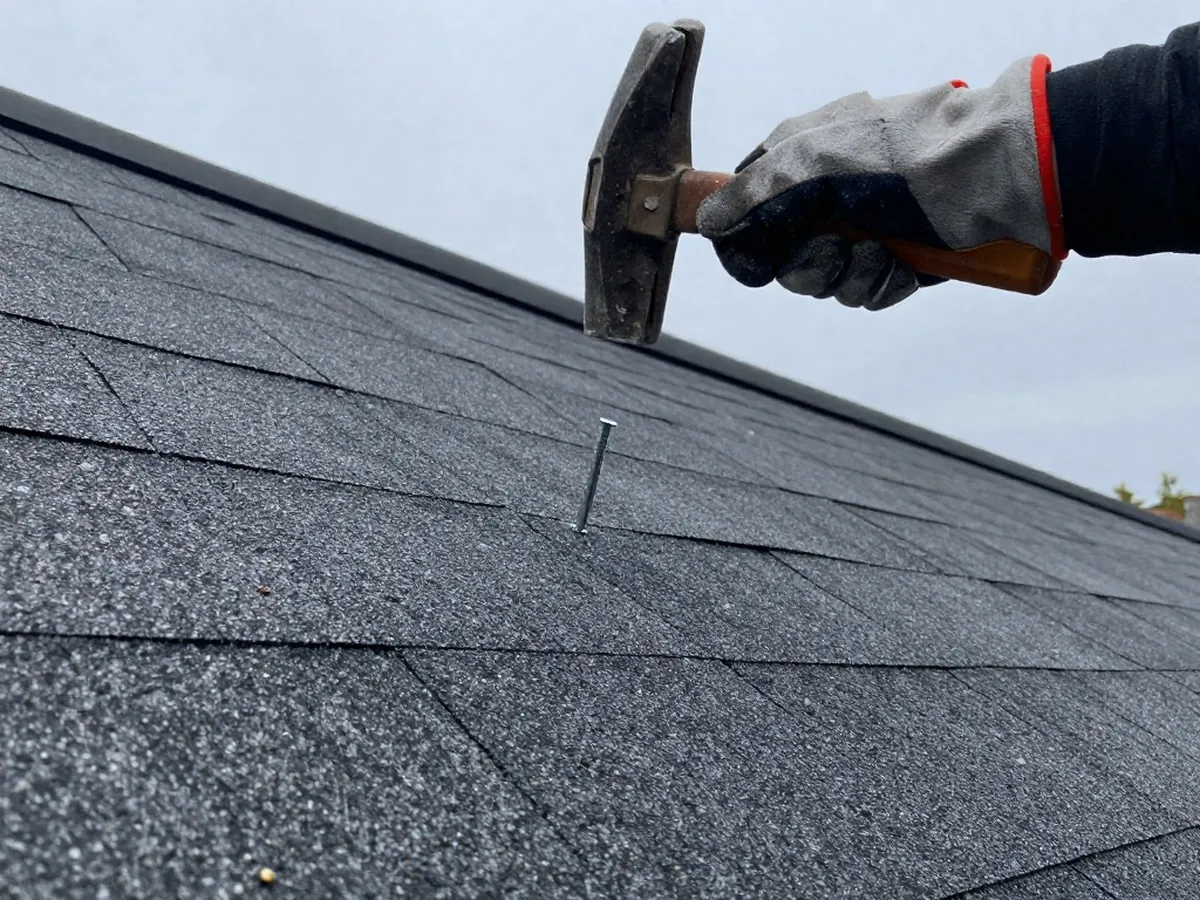
A flat bar pries up the nails holding the damaged shingle. Out it comes, and the replacement slides up under the course above, pinned by nails that the next row hides.
FEMA's shingle fact sheet says to use underlayment every time, a detail worth listening for when a roofer explains the job.
Paperwork for a small roof job
Mending existing roof covering on a freestanding home for one or two families sits on the state's ordinary maintenance list. That means no permit application. The list's roofing line says nothing about attached houses. The wider paper trail sits on the contractor checks page.
Ask about a visit
Keep the address, a rough roof age and a few ground-level photos nearby, then call (732) 574-5073. Tenants hand the owner a dated photo first. Towns: Clark, Cranford and Linden.